| |
To make sure you're seeing the most recent version of this syllabus, clear or bypass your cache each day. To do this, Hit Control + Shift + Reload (Chrome) or for Safari,  . .
If you are using a browser not listed here, see more at this link |
| Week |
Date |
Day |
Homework due on this day |
Links I use in class or recommend for more information |
| 1 |
T |
1/14/2020 |
Activity
|
|
| |
R |
1/16/2020 |
Discussion (readings due today)
Activity
II. Shakespeare's Language and the Imagery Analysis
- Activity: Look for metaphors (these could be nouns, verbs,and adjectives)
- Activity: Look for repeating tropes
|
I. The Imagery Analysis
Context/ Links
- Emblem to Imagery:
- Shakespeare's language: grammar and class
- Shakespeare's coinages and phrases
- Shakespeare's texts (quartos, bad quartos, and folios)
- Richard and the "monster baby"
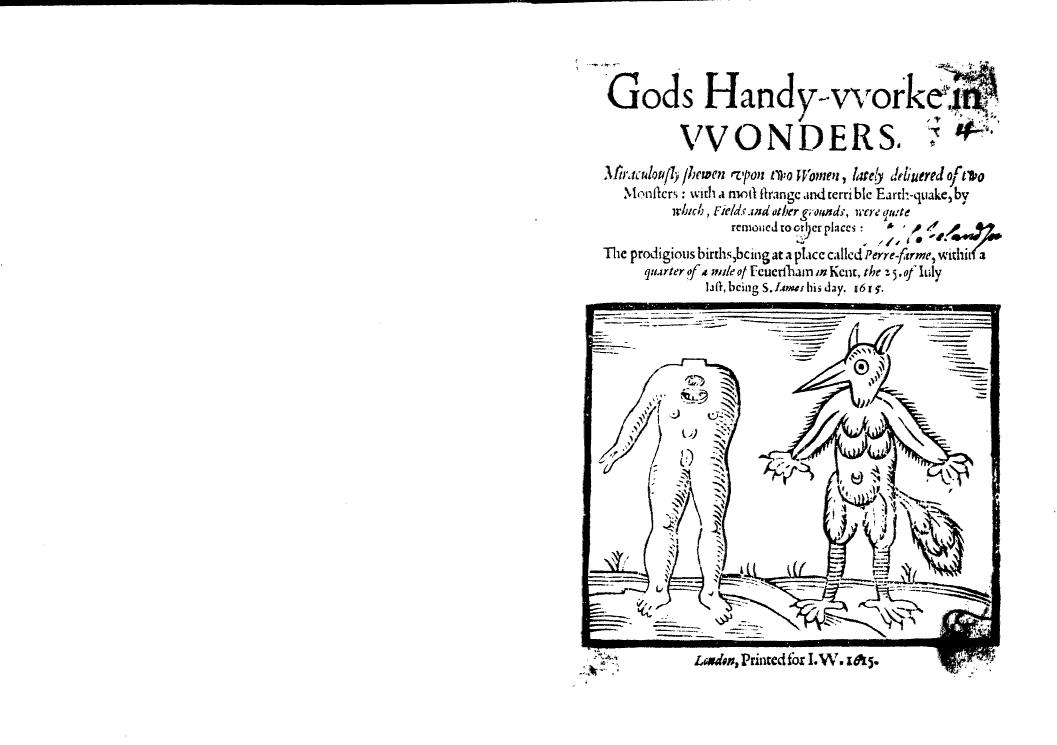
- Prodigy books
|
| |
|
|
|
|
| 2 |
T |
1/21/2020 |
Discussion (readings due today)
Activity
- Practice Imagery Analysis for Richard III (due on last day of play discussion) using Imagery Form
|
|
| |
R |
1/23/2020 |
Assignments Due
- Discussion (readings due today)
- Richard III Act 3
- 3.1 Regent Richard and young prince Edward (now king) (48:00)
- 3.7 staged show with Lord Mayor (59:35)
|
War of the Roses & Shakespeasre's Tetralogies
|
| |
|
|
|
|
| 3 |
T |
1/28/2020 |
Discussion (readings due today)
- Richard III Act 4
- 1.08.55 Richard loses Buckingham's good will
- 1:17:00-1:26 4.4 Queen Margaret and the women
- Questions:
- Women and children in the play. Why so many?
- What's great and what's amateurish about this early play?
- What is the conflict, and how does the resolution to the conflict play out?
- Politics: By what right does the king govern? How do kings get and maintain power?
- Metaphysics: Is Richard's end "just"? Is his punishment deserved? Is God or Providence at work (see prophecies)?
- Pschology: Is Richard a stereotypical "vice" or is he more complex? What evidence do we have? What causes him to do evil?
|
|
| |
R |
1/30/2020 |
Assignments Due
- Imagery Analysis for Richard III
Discussion (readings due today)
|
Imagery Form |
| |
|
|
|
|
| 4 |
T |
2/4/2020 |
Assignments Due
Discussion (readings due today)
|
Opening of Hamlet:
Hamlet, the Text
Teaching Hamlet
- Mel Gibson goes back to school (improvisation unit 3): 7:30
- Shakespeare set free, acting, and unit plans
|
| |
R |
2/6/2020 |
Discussion (readings due today)
|
Discussion of thesis sentences and possible support
Hamlet Act 2
|
| |
|
|
|
|
| 5 |
T |
2/11/2020 |
Assignments Due
Discussion (readings due today)
- HLW Chapter 1
- Hamlet Interview with Father 1.5 (Film 31)
- Ophelia/Polonius/Laertes Plot (1.3, 2.1) (Film 21.10;
- Players and R&G (2.2) film 1:08, 1:16
|
Hamlet Act 3
Textual Links for Hamlet (HLW Ch. 1)
|
| |
R |
2/13/2020 |
Assignments due
Discussion (readings due today)
- Hamlet Act 3.1 Ophelia, famous soliloquy 3 (Film 57)
- 3.2 Play within play
- 3.4 Gertrude scene
|
Hamlet Act 4 and 5 links
- Dekker's Wonderful Year
- Macbeth: Physical Shakespeare
- Last soliloquy (cut from Folio): 4.4 (Branagh Disk 1 2:32:30) and an exercise on imagery for students
- Ophelia 4.5 (2:14:30) (Tennant)
- Death of Ophelia; grave scene end of 4.7-5.7 (2:23:20) (Tennant)
- Same scene, Branagh (disk 2 38:22)
|
| |
|
|
|
|
| 6 |
T |
2/18/2020 |
Assignments Due
Discussion (readings due today)
- HLW Chapter 2.1
- Hamlet Act 4
|
Primary Sources
[Medieval revenge feuds aka Romeo and Juliet are intolerable to society, and yet as the] "first modern intellectual of our literature," Hamlet realizes that "power is in the hands of a class whose values humane people feel they must repudiate." — Arnold Kettle, Marxist [The "fatal flaw" is not in the individual but in the state and the social order it upholds]
"Tragedy is so far from being a proof of the pessimism of the Greeks that it may, on the contrary, be considered a decisive rebuttal....Saying Yes to life even in its strangest and most painful episodes, the will to life rejoicing in its own inexhaustible vitality even as it witnesses the destruction of its greatest heroes ... Not in order to be liberated from terror and pity, not in order to purge oneself of a dangerous affect by its vehement discharge — which is how Aristotle understood tragedy — but in order to celebrate oneself the eternal joy of becoming, beyond all terror and pity...." — Friedrich Nietzsche |
| |
R |
2/20/2020 |
Assignments Due
- What to study for quiz on HLW Chapter 2.2
- Hamlet Act 5
- Imagery analysis for Hamlet
- Bring your imagery analysis for Hamlet to class today (also, bring Hamlet, Language and writing)
Discussion (readings due today)
Activity:
|
Imagery Form |
| |
|
|
|
|
| 7 |
T |
2/25/2020 |
ADVISING DAY: NO CLASS |
|
| |
R |
2/27/2020 |
Assignments Due
- Introduction to research papers
- Brainstorming about thesis sentences
- PAPER: Thesis sentences (hand these in on Blackboard) by Friday
|
|
| |
|
|
|
|
| 8 |
T |
3/3/2020 |
Assignments Due
- PAPER: Sign up for group presentations in my office
Discussion (readings due today)
|
Imagery Form |
| |
R |
3/5/2020 |
Assignments Due
- PAPER: Bring to class and submit on Blackboard: quotations to support your thesis (remember to focus on rhetorical tropes, not plot, and make sure they are cited.)
Discussion (readings due today)
Activity:
|
|
| |
|
|
|
|
| 9 |
T |
3/10/2020 |
SPRING BREAK: NO CLASS |
|
| |
R |
3/12/2020 |
SPRING BREAK: NO CLASS |
|
| |
|
|
|
|
| 10 |
T |
3/17/2020 |
EXTENDED SPRING BREAK
|
|
| |
R |
3/19/2020 |
EXTENDED BREAK |
|
| |
|
|
|
|
| 11 |
T |
3/24/2020 |
Assignments Due
- PAPER: PowerPoint (due on Blackboard by today; presented this week in my office (bring two classmates with you)
Discussion (readings due today)
- Measure for Measure Acts 3-4
|
Imagery Form |
| |
R |
3/26/2020 |
Assignments Due
- Imagery analysis for Measure for Measure due
Discussion (readings due today)
- Measure for Measure Acts 5
Activity |
Imagery Form |
| |
|
|
|
|
| 12 |
T |
3/31/2020 |
Assignments Due
Julius Caesar act 1
Activity:
- Zotero demonstration
- Places to look for primary sources
|
|
| |
R |
4/2/2020 |
Assignments Due
- PAPER: Paper 1 draft due Wednesday at midnight)
Juius Caesar Act 2
Activity:
- More on Zotero and finding sources
|
|
| |
|
|
|
|
| 13 |
T |
4/7/2020 |
Assignments Due
- PAPER: Preliminary List of primary secondary sources you plan to read for paper revision (use Zotero) due on Blackboard
Discussion (readings due today)
Activity:
- Demo: How to look at my comments and print out a pdf
|
Imagery Form |
| |
R |
4/9/2020 |
Assignments Due
Discussion (readings due today)
Activity:
- Demonstration of Track changes
- Discussion of paper 1 (grammar and mechanics) with a partner
|
|
| |
|
|
|
|
| 14 |
T |
4/14/2020 |
Assignments Due
- PAPER: Today: Corrected paper 1 grammar and mechanics (with track changes) due on Blackboard
- Before you leave for break: Imagery analysis for Henry V
Discussion (readings due today)
Activity: |
|
| |
R |
4/16/2020 |
Assignments Due
- PAPER: Quotations from primary and secondary sources due on Blackboard
Discussion (readings due today)
Activity: |
|
| |
|
|
|
|
| 15 |
T |
4/21/2020 |
Assignments Due
- PAPER: Bring your laptops with paper 1 and quotations from primary and secondary sources
Discussion (readings due today)
Activity:
- How and why to support points and integrate outside sources
|
|
| |
R |
4/23/2020 |
Assignments Due
Discussion (readings due today)
Activity:
- Happy 456 birthday Shakespeare Party!
|
|
| |
|
|
|
|
| 16 |
T |
4/28/2020 |
Assignments Due
- PAPER: Bring your laptops to class with a rough draft of your final paper, including sources
Discussion (readings due today)
Activity:
- Exchange papers with one or two classmates and make final suggetions
|
|
| |
R |
4/30/2020 |
LAST CLASS
Assignments Due
Discussion (readings due today)
|
|
| FINAL EXAM TIMES |
| |
M |
5/4/2020 |
BIBLE: 12-2:30 PM |
|
| |
R |
5/7/2020 |
POETRY WRITING: 8:30-11 AM |
| |
F |
5/8/2020 |
SHAKESPEARE: 12-2:30 PM |
Take home exam due by 2:30 PM |
|
|
|
|
|
|
|
|
|
|
|
|
|
|
|